Putting Mission into Practice
Oct 15, 2026
Wabash grant supports faculty development
The US $30,000 grant received from the Wabash Center for Teaching and Learning in Theology and Religion recognized the remarkable potential within the Colleges.
The grant was to support work in advancing pedagogies of social justice, decolonization, and indigenization in a Canadian Catholic context. Opportunities were provided for faculty to reflect on their own practice as instructors, and to learn how to foster a learning environment that is inclusive, rooted in social justice, and built around a culture of dialogue.
While the grant initially focused on religion and theology faculty, it ultimately brought together student-facing staff and faculty from across the Colleges and disciplines to participate in community dialogue, workshops, and place-based learning initiatives.
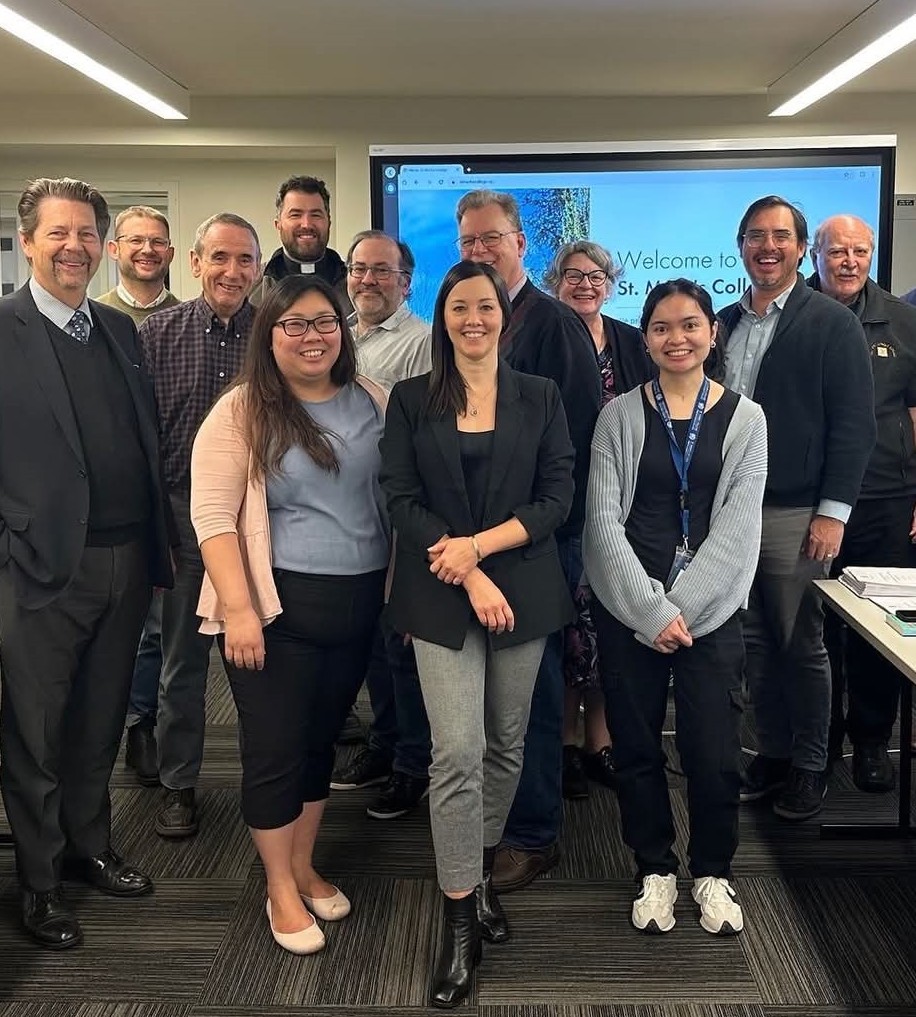
Among many outcomes, faculty concluded that forming students for dialogue, social justice, and civic engagement is integral to the Colleges’ Catholic identity.
In their final report, the project organizers said, “As unique stewards of the Colleges’ Catholic identity, we have a responsibility to transform our pedagogy and course design and to encourage broader curricular and institutional change in ways that respect everyone’s journeys.”
Although the grant has come to its end, the ideas and findings that resulted will continue to shape how the Colleges live out their Catholic mission in the context of the Coast Salish territory in which we work and study. Faculty members have curated bibliographies, published academic papers, and discussed their learning on podcasts.
“Forming faculty, staff, and students who are committed to dialogue, social justice and civic engagement in an increasingly diverse and divided world is not an optional add-on but rather an integral part of our Catholic identity.” – Final Report from College faculty
Activity highlights
Organized dialogues gave faculty members the space to reflect on and share about experiences and challenges related to the grant’s themes in their course design and instruction.
Pedagogy workshops facilitated by experts from UBC and University of Victoria anchored discussions on social justice, decolonization, reconciliation, and Indigenization within Church history and the Colleges’ Catholic identity.
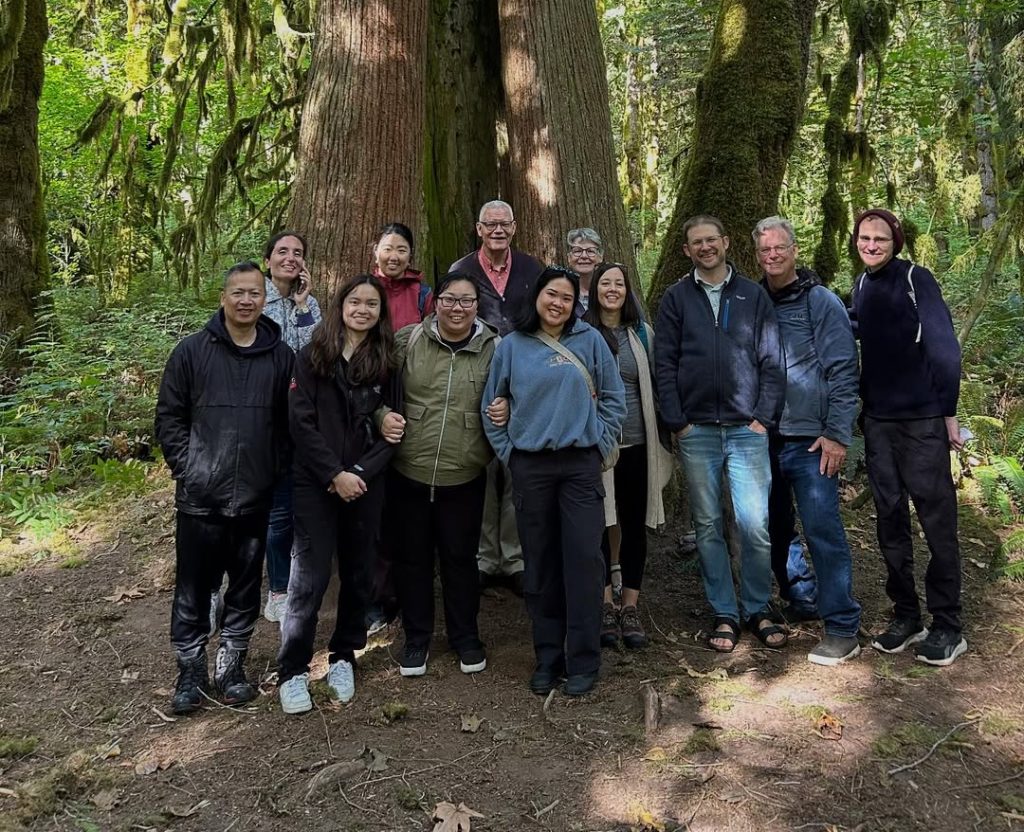
Place-based learning experiences provided opportunities for faculty and staff to listen to and learn from Indigenous peoples, and to refine the Colleges’ approach to experiential education.
Spotlight on place-based education
Place-based education is about recognizing the land and community as teachers, and learning through hands-on, real-world experiences that are grounded in the local context.
Here’s a look at how place-based earning at the Cheakamus Centre in the Squamish Nation made an impact on faculty.
“Our day at Cheakamus Centre began with an introduction to life at the Longhouse by our Squamish guide, Jack, who led us in splitting cedar for kindling. Our guides led us on a Cedar Walk through an old growth forest and along Ch’iyákmesh River tributaries, where we watched Pink, Coho and Chum salmon runs and tried dip net fishing. We practiced Salish weaving techniques, learned about the cultural significance of the woolly dog, and spent some time on the river trying flintknapping with basalt pebbles. More than any reading or discussion we had up to that point, the trip made place-based and Indigenous ways of learning concrete, helping us connect to the land, the trees, and the river as fellow teachers, and concretizing Pope Francis’ teaching around integral ecology.”
This article was originally published in the 2026 edition of A Year in Review. For more stories like this about the Corpus Christi and St. Mark’s College community, read the full publication at the link below.
